
























































































































































































































































































































































































































































































































































































































































































































































































































































































































































































































































































































































































































































































































































































































Friday, 09 October 2026

In a landmark recognition, UNESCO has officially inscribed Egypt’s iconic dish, Koshari, on its Representative List of the Intangible Cultural Heritage of Humanity during the 20th session of the Intergovernmental Committee for the Safeguarding of Intangible Cultural Heritage (20.COM). This announcement is far more than an acknowledgment of a popular comfort food—it is a celebration of Koshari as a living social practice that captures the very soul of Egyptian daily life.
Koshari’s registration does not recognize it solely as a recipe, but as a ritual interwoven with social meaning. Born from humble, readily available ingredients—rice, pasta, lentils, fried onions, and tangy tomato sauce—Koshari is rich in the values of sharing and community. Whether sold from vibrant street carts or prepared in home kitchens, it brings together people from all walks of life, making it far more than a sum of its parts.
As the UNESCO document highlights, Koshari’s universality across generations and social classes embodies values of equality, simplicity, and unity, gathering Egyptians—regardless of background—around a communal table.
Despite circulating stories about possible foreign origins, historical records and social studies reaffirm Koshari as a uniquely Egyptian creation, evolving on the bustling streets of Cairo and Alexandria. Unlike the Indian dish Khichdi, to which it is sometimes mistakenly linked, Egyptian Koshari features pasta, chickpeas, spicy garlic vinegar, and crispy fried onions—ingredients and techniques not found in Indian or other “similar” recipes. In this, Koshari stands as a distinct testament to Egyptian ingenuity.
According to UNESCO’s official statement, Koshari is not merely street food, but a daily tradition. Its preparation skills are passed down, especially from mothers to daughters, making it a living heritage. It is a staple at family tables, festivities, national occasions, and is even served in Egyptian embassies around the world. As such, it forms a vibrant thread in the fabric of Egypt’s collective memory.
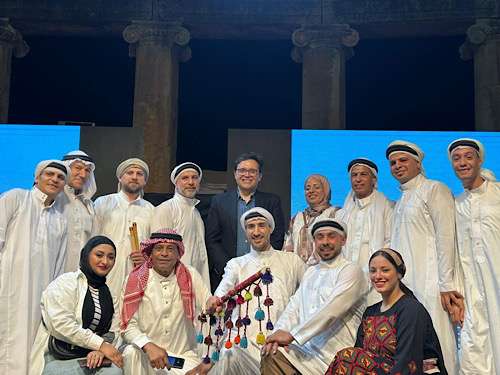
The effort to register Koshari was led by Egypt in 2024, fulfilling all criteria to safeguard its folk heritage, culminating in UNESCO’s official registration in 2025. This follows previous successful inscriptions of other Egyptian traditions, such as “Tahteeb” (stick fencing), the “Epic of Bani Hilal,” and “Simsimiya” (traditional music), all reflecting Egypt’s commitment to protecting and celebrating its living heritage.
UNESCO's acknowledgment of Koshari provides a fresh opportunity to present Egyptian culture from a unique perspective—highlighting the warmth of everyday life, the strength of social ties, and the remarkable ability of Egyptians to craft symbols of universal human value from the simplest things.
Importantly, this international recognition settles the matter of Koshari’s roots: it is not an imported or adapted dish, but an authentic Egyptian invention, born from local neighborhoods and now inseparable from Egypt's cultural identity.
Koshari’s feature as an intangible cultural heritage does more than fortify Egyptian identity—it opens doors for the world to embrace Egyptian cuisine. As a plant-based, nutritious, and affordable dish, Koshari is adaptable to diverse diets, making it especially appealing for families of all faiths—be it Christians during fasting periods or those seeking satisfying options on a modest budget.
Looking ahead, Egyptians hope to add more of their treasured practices to the UNESCO list, seeing it as a crucial way to protect and transmit their authentic heritage to future generations, preserving its enduring value and unique identity for years to come.