









































































































































































































































































































































































































































































































































































































































































































































































































































































































































































































































































































































































































































































































Friday, 09 October 2026
By Dr. Hussein Bassir
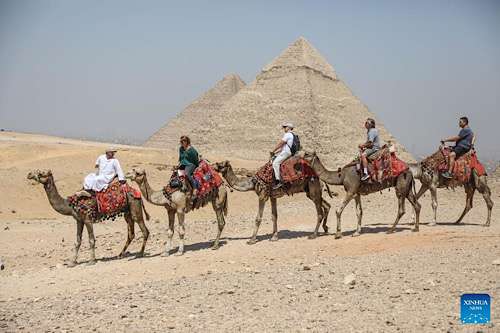
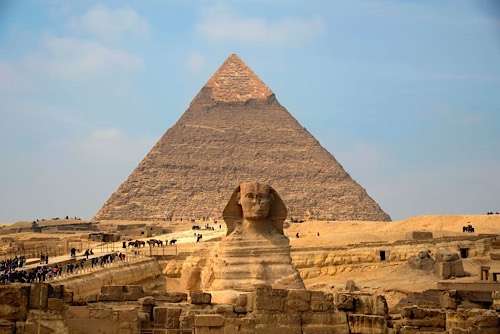
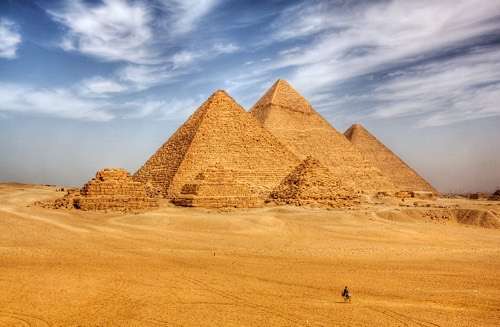
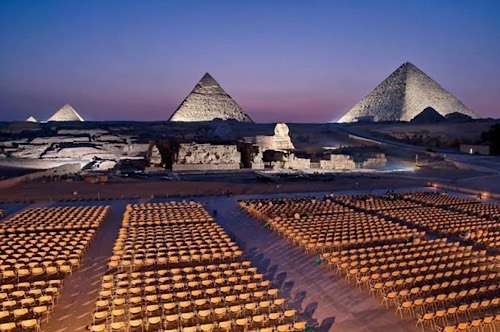
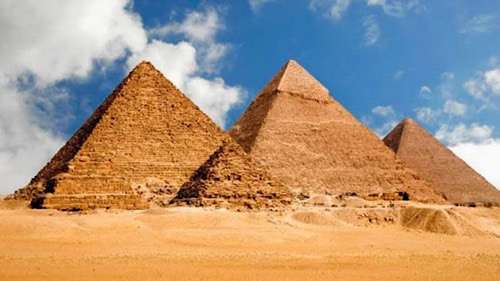
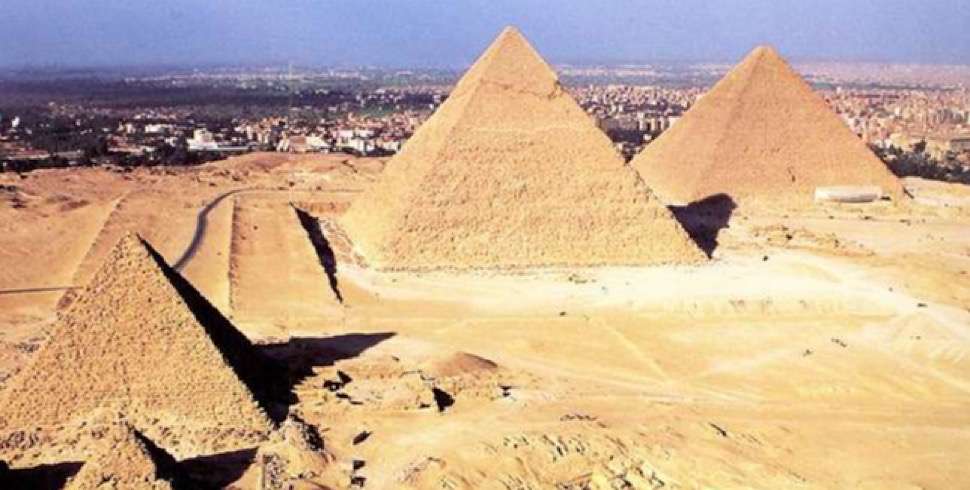
The Great Pyramid of Giza is one of the most enduring symbols of ancient Egypt. For centuries, people have marveled at its massive size, precise alignment, and remarkable strength. But how exactly was this colossal monument built? Let’s explore the scientific theories and archaeological discoveries that shed light on this ancient wonder.
1. The Scale and Structure of the Great Pyramid
The Great Pyramid, built for Pharaoh Khufu (c. 2580–2560 BCE), originally stood about 146.6 meters (481 feet) tall and was constructed from approximately 2.3 million limestone and granite blocks, each weighing between 2.5 and 15 tons. Today, it is slightly shorter due to the loss of the outer casing stones.
2. Quarrying and Transporting the Stones
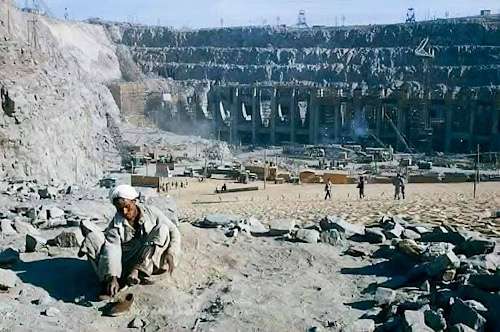
Archaeologists have found extensive quarry sites near Giza and in the surrounding areas. The majority of the limestone blocks were quarried locally, while granite for the inner chambers was transported from Aswan, over 800 km (500 miles) to the south.
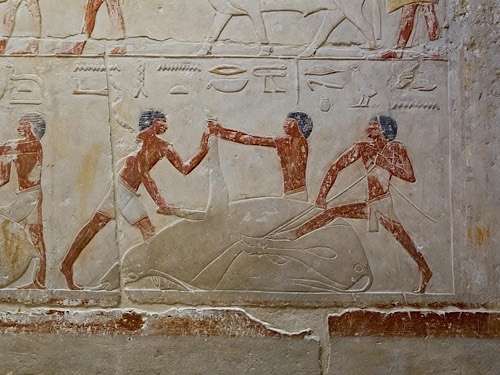
- Sledges and Water Lubrication: Wall paintings and experimental archaeology suggest that workers used wooden sledges to drag stones over prepared paths. Recent research indicates that pouring water on the sand ahead of the sledges reduced friction, making it easier to move the heavy blocks.
- Nile River Transport: The Nile River played a vital role. Blocks from Aswan were likely transported by boats or rafts, arriving at the Giza plateau via man-made canals or harbors near the site.
3. Construction Techniques
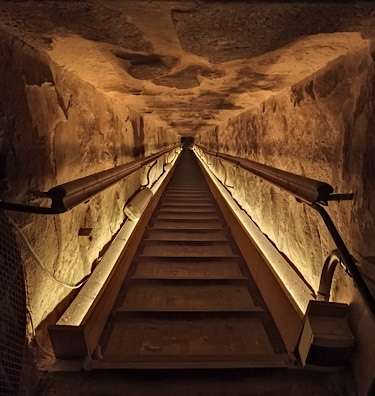
- Internal Ramps Theory: French architect Jean-Pierre Houdin proposed that the pyramid was built using a system of internal spiral ramps. According to this theory, as the pyramid rose, ramps within the structure allowed workers to transport blocks upward efficiently without the need for long external ramps.
- Levers and Counterweights: Other researchers suggest that simple wooden levers and counterweights were used to lift stones into position.
- Precise Planning: The layout of the pyramid required exceptional planning and precision. Tools such as plumb bobs, A-frames, copper chisels, dolerite pounders, and leveling instruments were used to align and shape the blocks.
4. Workforce and Organization
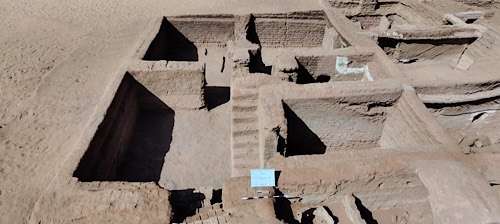
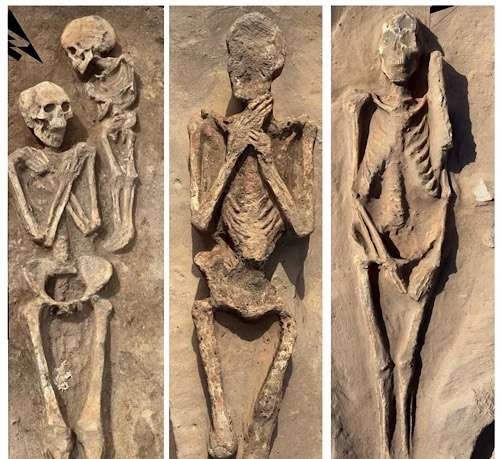
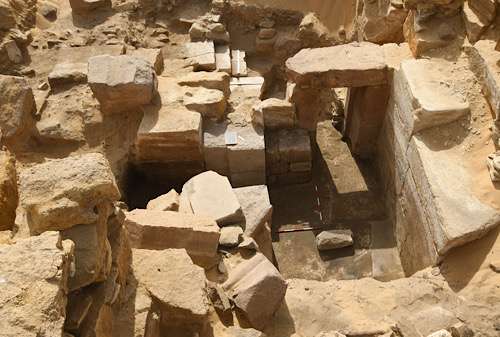
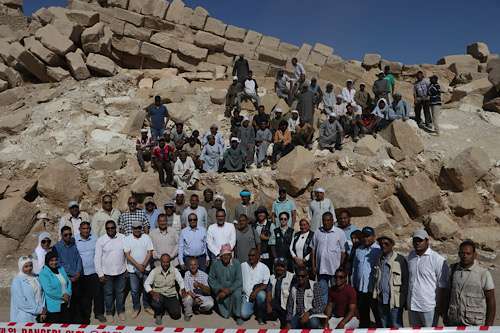
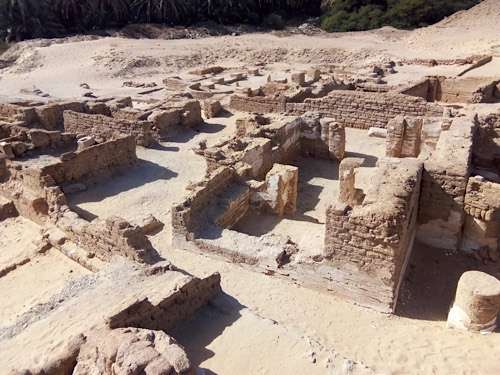
Recent discoveries, such as the workers’ community at the Giza plateau, provide insight into the labor force. Contrary to popular myths of slave labor, evidence suggests that a well-fed and organized workforce of tens of thousands of skilled laborers, artisans, and seasonal workers built the pyramid.
These workers lived in nearby villages, were organized into crews and teams, and received food, beer, and medical care. The workforce likely included specialists in stone-cutting, transportation, construction, and project management.
5. Alignment and Orientation
The pyramid’s alignment is astonishingly precise. The four sides are oriented almost exactly to the cardinal points (north, south, east, and west) with minimal deviation. This precision was likely achieved using tools such as merkhets (sighting instruments) and gnomons (shadow sticks), which helped ancient Egyptian surveyors align the structure with the stars and sun.
6. Timeframe
Estimates suggest that the Great Pyramid was constructed over 20 to 30 years. Its completion required a combination of advanced engineering skills, precise calculations, immense manpower, and state organization.
7. Ongoing Discoveries
Modern archaeological techniques, such as muon tomography (a particle-based scanning method) and infrared thermography, have revealed hidden voids and structures within the pyramid. These discoveries continue to refine our understanding of how the ancient Egyptians built these iconic structures.
The construction of the Great Pyramid of Giza was a remarkable achievement that combined engineering genius, social organization, and determination. Through scientific research and archaeological evidence, we now understand much more about how this ancient wonder was built, though many mysteries remain. As we continue to explore, new discoveries promise to reveal even more about the secrets of the pyramids.

Dr. Bassir is the former General Director of the Giza Pyramids and Director of the Antiquities Museum, Bibliotheca Alexandrina.