














































































































































































































































































































































































































































































































































































































































































































































































































































































































































































































































































































































































































































































































































































Friday, 09 October 2026
The Egyptian Space Agency (EgSA) announced the successful launch of the Egyptian nanosatellite SPNEX on December 10, 2025. The satellite has entered its designated orbit and begun transmitting its initial signals, representing a significant scientific achievement that highlights Egypt's progress in space technology.
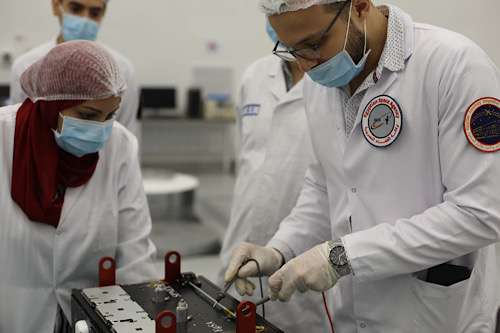
The SPNEX launch is part of Egypt's nanosatellite development programs, demonstrating the capabilities of national experts in building complete space systems—from design and manufacturing to assembly, integration, testing, and orbital operations.
SPNEX serves as an orbiting scientific laboratory, developed through collaboration between the Egyptian Space Agency and the Academy of Scientific Research and Technology (ASRT). It specializes in measuring plasma properties in the ionosphere, contributing to studies on the effects of solar and geomagnetic storms, building accurate ionospheric models, and supporting climate research.
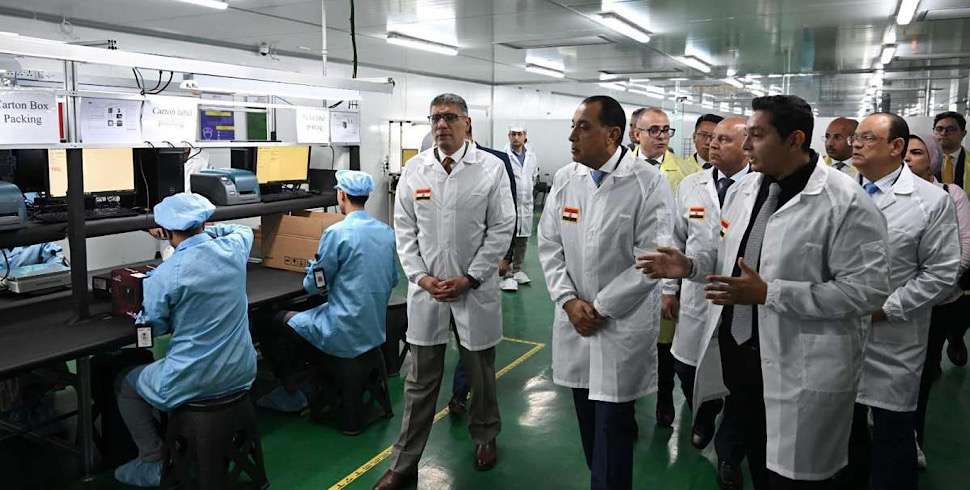
The satellite was fully developed in EgSA laboratories starting in the first quarter of 2022, with all assembly, integration, and testing conducted at the agency's Assembly, Integration, and Testing (AIT) center in Egypt's Space City.
On December 12, 2025, the ground control and reception station—designed and built by Egyptian engineers—received SPNEX's telemetry signals. These confirmed the satellite's orbital stability, high system efficiency, and battery charge reaching approximately 90% after solar orientation.
SPNEX was launched aboard China's Lijian-1 (Kinetica-1) Y11 rocket from the Dongfeng Commercial Space Innovation Pilot Zone in northwest China, alongside eight other satellites. The design, systems development, software, and ground station were entirely handled by Egyptian technical teams.
In the near future, SPNEX data will be made available to researchers at Egyptian universities and research centers, supporting scientific research and space applications.
This launch underscores Egypt's growing self-reliance in space technology and its commitment to advancing scientific knowledge in ionospheric and climate studies.