


















































































































































































































































































































































































































































































































































































































































































































































































































































































































































































































































































































































Friday, 09 October 2026
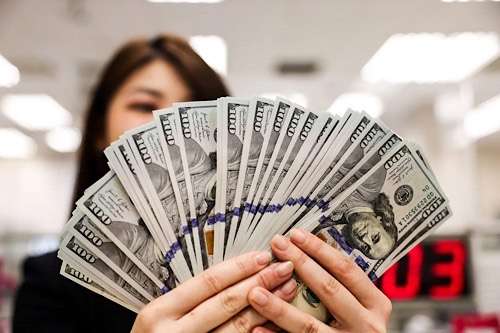 A bank employee poses with $100 notes in Taipei on May 6, 2025.
I-HWA CHENG—AFP VIA GETTY IMAGES
A bank employee poses with $100 notes in Taipei on May 6, 2025.
I-HWA CHENG—AFP VIA GETTY IMAGES
WASHINGTON — The US dollar is enduring its worst start to a year since 1973, according to the Financial Times, as global investors reconsider their reliance on the world’s leading currency amid the backdrop of Donald Trump’s trade and economic policies.
The dollar index—which compares the dollar’s value against six major currencies including the pound, euro, and yen—has dropped over 10 percent so far in 2025. This marks its weakest performance for the first half of any year since the collapse of the gold-backed Bretton Woods system.
“Trump 2.0’s unpredictable policies have made the dollar the scapegoat,” said Francesco Pesole, a foreign exchange strategist at ING.
Pesole noted that the president’s inconsistent tariff measures, soaring government borrowing, and doubts over the Federal Reserve’s independence have undermined the dollar’s historic role as a safe haven for investors.
The dollar slipped another 0.2 percent on Monday as the US Senate readied itself to vote on amendments to Trump’s signature tax reform package.
This sweeping legislation is projected to add $3.2 trillion to the US national debt over the next ten years, heightening concerns about the sustainability of America’s fiscal path and triggering a rush out of US Treasury securities.
With these developments, the dollar is on pace for its weakest first six months since it lost 15 percent in 1973, and its worst half-year stretch since 2009.
This sharp decline has wrong-footed analysts who predicted at the year’s outset that Trump’s trade battles would primarily harm foreign economies while boosting US inflation and strengthening the dollar relative to other currencies.
Contrary to those forecasts, the euro—widely expected on Wall Street to drop to parity with the dollar—has instead surged 13 percent above $1.17, as investors focused on vulnerabilities in the US economy and sought safer assets elsewhere, such as German government bonds.
“There was a seismic shift in US policy, almost a ‘liberation day’ moment,” said Andrew Balls, chief investment officer for global fixed income at asset management giant Pimco, referencing Trump’s introduction of “reciprocal tariffs” in April.
Balls argued that the dollar’s status as the global reserve currency remains unchallenged for now. However, he cautioned, “that doesn’t mean we won’t see a meaningful drop in the value of the dollar”—pointing out that more investors worldwide are moving to hedge their dollar exposure, a trend that’s putting additional downward pressure on the greenback.
Contributing further to the dollar’s slide this year are rising expectations that the Federal Reserve, pushed by Trump, will reduce interest rates more aggressively. Futures markets indicate at least five quarter-point rate cuts could take place by the end of next year.
Lower rate expectations have buoyed US equities, helping stocks shrug off trade war anxieties and geopolitical tensions in the Middle East to reach record highs. Yet the weaker dollar means that, when measured in the same currency, the S&P 500 still trails major European stock indices.
From pension funds to central banks, prominent investors have expressed intentions to scale back their holdings of the dollar and US-based assets, increasingly questioning whether the currency still offers a refuge from market volatility.
“Foreign investors are demanding more FX hedging for their dollar-denominated holdings, which has been another barrier to the dollar mirroring the rebound in US equities,” Pesole of ING added.
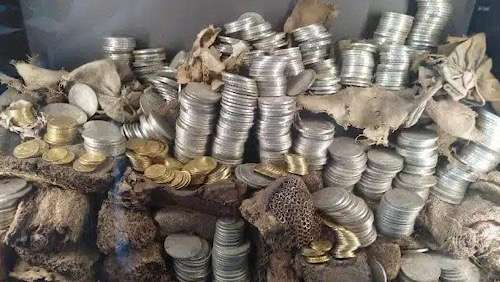
Gold prices, meanwhile, have soared to new highs this year as central banks and others, wary of dollar devaluation, stepped up their purchases.
The dollar’s drop has pushed it to its lowest point against major currencies in more than three years. Given the rapid pace of decline and the prevalence of bearish bets, some analysts now anticipate a period of stabilization.
“A weaker dollar is becoming a crowded trade, and I suspect the rate of decline will slow,” said Guy Miller, chief market strategist at Zurich Insurance Group.