























































































































































































































































































































































































































































































































Friday, 09 October 2026
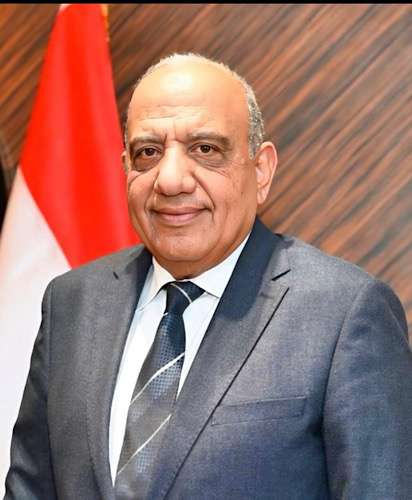
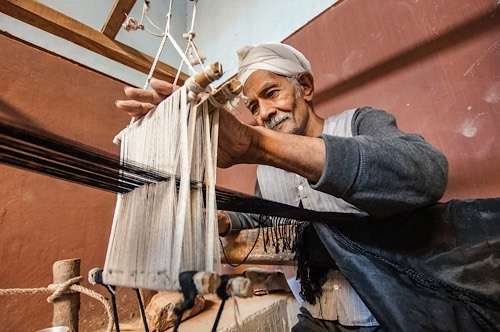
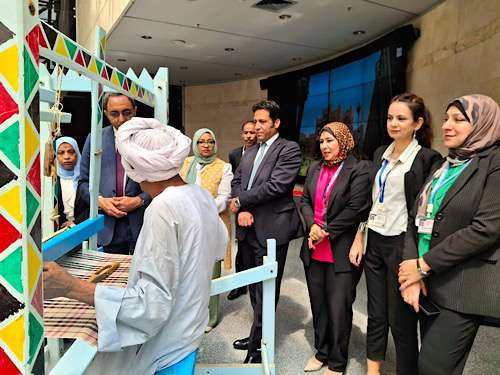
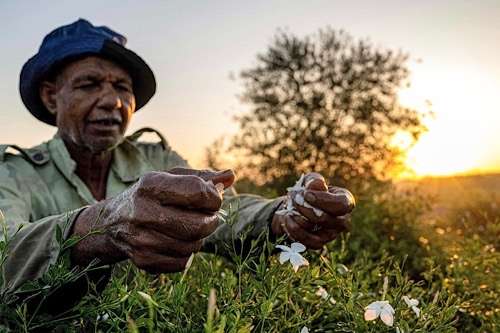
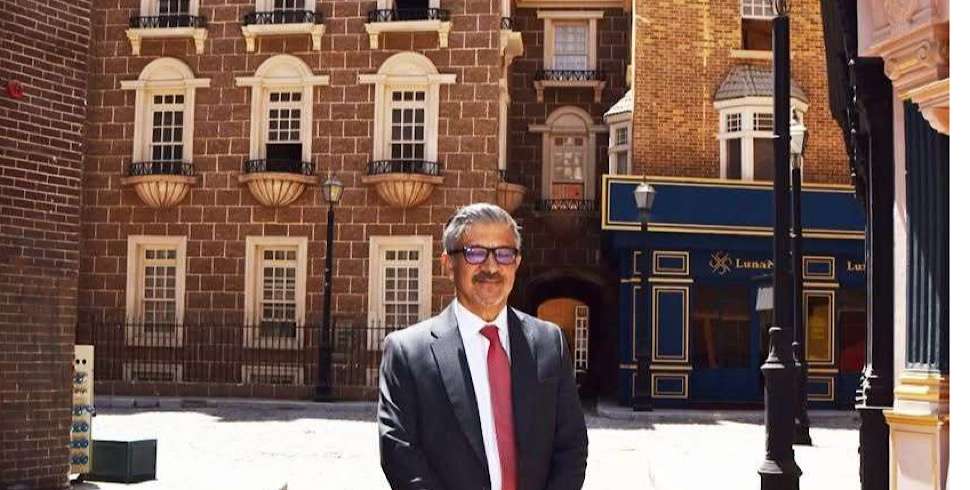
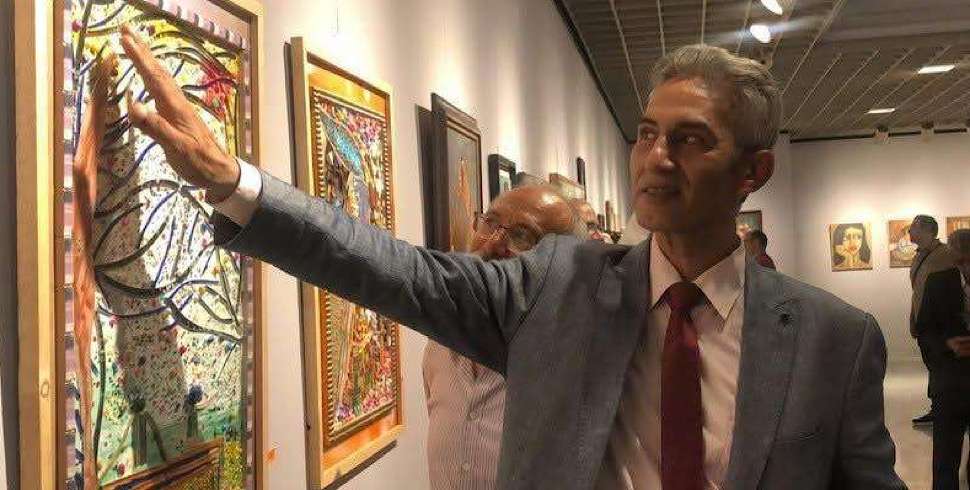
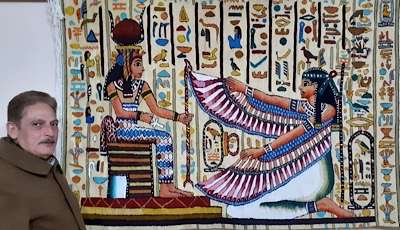 Arabi Mahrous stands proudly beside one of his works.
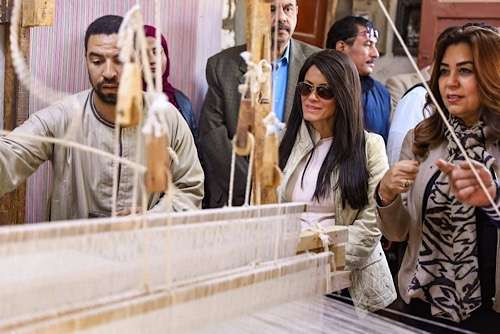
In the tranquil village of Saqiet Abu Shaara in Egypt’s Menoufia Governorate, the steady clatter of handlooms is as constant and rhythmic as the rural seasons.
Here in the Ashmoun district, nearly every home has a loom, and almost every family is steeped in the tradition of carpet weaving. Among these artisans is Arabi Mohamed Mahrous, a 65-year-old artist whose distinctive approach to weaving has set him apart in the world of handmade carpets.
Mahrous’s journey was not a direct path from apprenticeship in the family trade. In fact, his beginnings were rooted in the classroom, where he worked as a teacher.
But the ever-present artistry in his village, his innate passion for color and form, and his vivid imagination lured him to the loom. For Mahrous, weaving is not just a livelihood or a mechanical craft—it is a form of painting, infused with emotion and vision.
From an early age in the 1980s, Arabi was captivated by the creative possibilities of his surroundings. “Every household had a loom,” he told The Nile Observer, recalling his school days and the sense of potential that imbued his village.

He was drawn to carpet-making not with the hands of a traditional weaver, but with the eye and heart of an artist. His aim has always been to elevate the craft beyond its conventional patterns, imbuing each piece with individuality and expressive power.
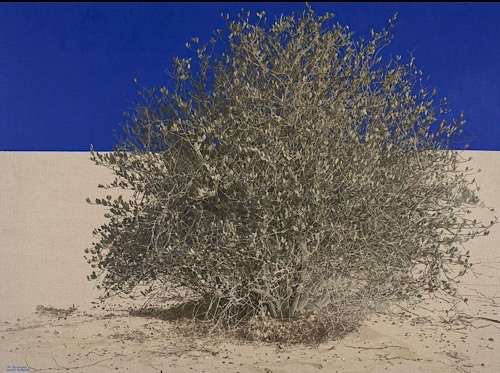
Mahrous’s work is deeply imaginative: some carpets are inspired by the rolling landscapes and gentle rhythms of rural Egypt; others reinterpret famous paintings or channel the vivid romanticism of Orientalist art.
Each tapestry is labor-intensive—a square meter might demand 25 days of meticulous work, while larger pieces take months. The process is slow and meditative, with every knot reflecting the artisan’s mood and state of mind.
When tired or troubled, Mahrous can see the dissonance play out in the colors and harmony of the finished piece. For him, a genuine carpet is not a simple reproduction of traditional motifs from places like Isfahan or Istanbul; it is a unique work of decorative art, alive with creativity.
Inspiration in this field has many roots, and Mahrous acknowledges the timeless influence of schools like Ramses Wissa Wassef’s in Harraniya, acclaimed for igniting a renaissance in modern Egyptian handweaving.
This conversation between regions—each with its own techniques and sensibilities—enriches the tradition further. Foua in Kafr El Sheikh, for example, is known for its distinctive use of texture and materials. Together, these communities draw from a common well of ancient Egyptian techniques, each adding their personal signature through color, design, and thread.
Although Mahrous’s love for weaving bloomed while he was still teaching, he sought to distinguish his work, infusing it with the discipline and observation gained from his educational background. Self-taught as an artist, he built on the foundations laid by the old teacher training curriculum, developing a singular artistic style that expresses his personality and the cultural richness of his village.
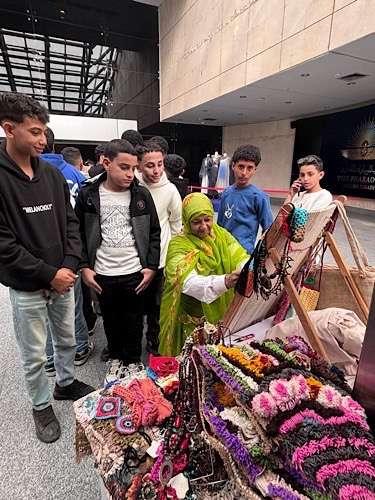
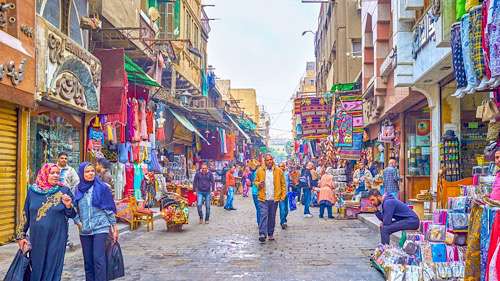
The world of handmade carpets, however, brims with challenges—chief among them, marketing. High-quality, handmade carpets are expensive and time-consuming to produce. They are found, for the most part, in select shops or in tourist destinations like Saqqara, Luxor, or along Al-Haram Street, staffed with people who can articulate the value and heritage of each piece to visitors from around the world. Only a discerning audience recognizes the true worth of this work, and independent weavers face steep barriers in connecting directly with buyers.
Artistic projects often demand collaboration and careful planning. Mahrous recounts the making of “The Coat of Joseph,” a grand work suffused with movement and detail that could not be contained on a small surface.
Sometimes, he partners closely with clients to translate their visions into vibrant matter: such was the case with a tapestry based on an Iranian painting, destined for France, and another that wrestled with the heavy theme of death.

“For pieces like these,” he notes, “I always require a prior agreement—their special requirements demand great sensitivity and clear communication.”
In contrast, his self-initiated works are simpler and intended to appeal to a broader audience, echoing the accessible natural themes popularized by figures like Ramses Wissa Wassef. This balance between personal expression and universal appeal underscores Mahrous’s approach.
Every step of the process is handled with care and intention. The dyeing process itself involves using specific fixatives and carefully chosen colors, with water prepared at a precise temperature before dyeing begins. After dyeing, the wool is hung to dry in a dedicated area, ensuring evenness and quality.
The workshop is thoughtfully arranged, with a separate space reserved solely for the weaving process; production starts with dyeing and continues through to the final finishing touches. Yet before any of this begins, Mahrous and his team always have a clear concept in mind: they envision the idea they wish to realize, which enables them to plan out all required materials, select colors, and determine the appropriate loom dimensions.
Over the years, Mahrous has produced many remarkable works that have found homes in some European countries as well as in many other parts of the world. Most of these have been special commissions from artists eager to see their paintings translated into exquisitely handmade carpets, in a sensitive collaboration bridging visual art and textile tradition.


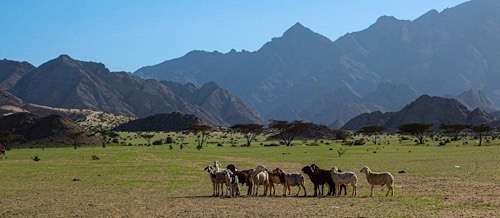
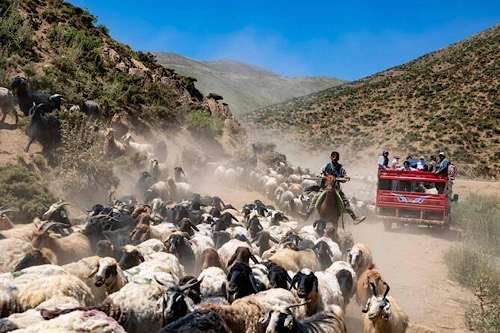
Starting with the annual shearing of sheep, Mahrous personally selects, inspects, and dyes the wool using plant-based colors, ensuring both its purity and the fastness of each shade. The preparation of materials is as thoughtful as the weaving itself—a testament to his reverence for both tradition and innovation.
Through his hands, Saqiet Abu Shaara’s threads are transformed from humble wool into enduring works of art. Mahrous’s carpets are not merely textiles; they are windows to a living heritage, expressions of individual artistry rooted in the collective wisdom of Egypt’s master weavers.